
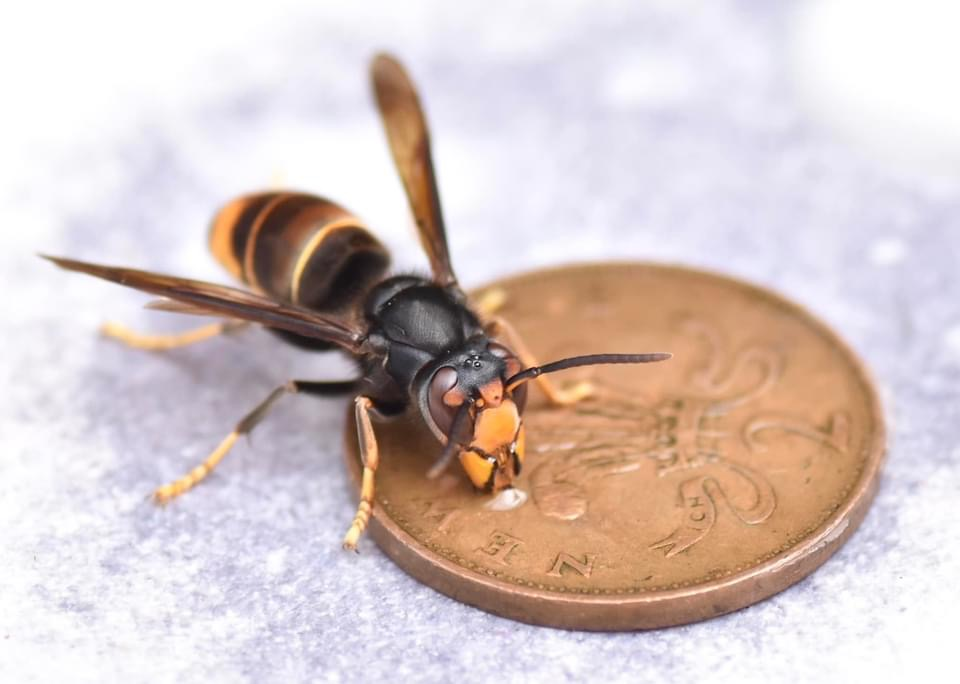
Yellow-Legged Asian Hornet
Learn how to identify a Yellow-Legged Asian Hornet, what to do if you see one, and how to report a suspected sighting.
Yellow-Legged Asian Hornet
Learn how to identify a Yellow-Legged Asian Hornet, what to do if you see one, and how to report a suspected sighting.
KNOW WHAT TO LOOK FOR
How to identify a Yellow-Legged Asian Hornet
Yellow-Legged Asian Hornets are slightly smaller than our native European hornet and have a distinctive dark appearance.
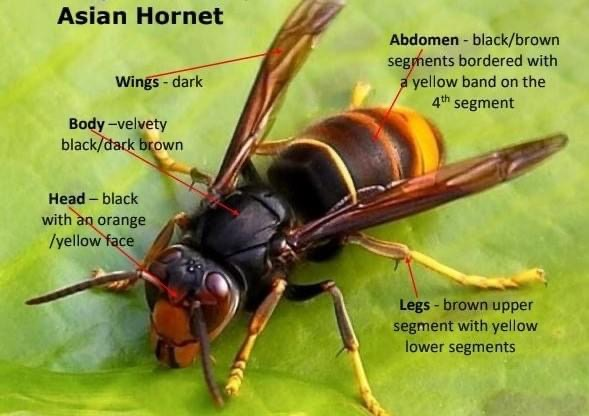
Look for a predominantly dark brown or black body, a dark thorax, an orange-yellow band towards the rear of the abdomen and characteristically yellow lower legs.
The body is predominantly dark brown or black with a velvety appearance.
The lower sections of the legs are distinctly yellow.
A single broad orange-yellow band is visible towards the rear of the abdomen.
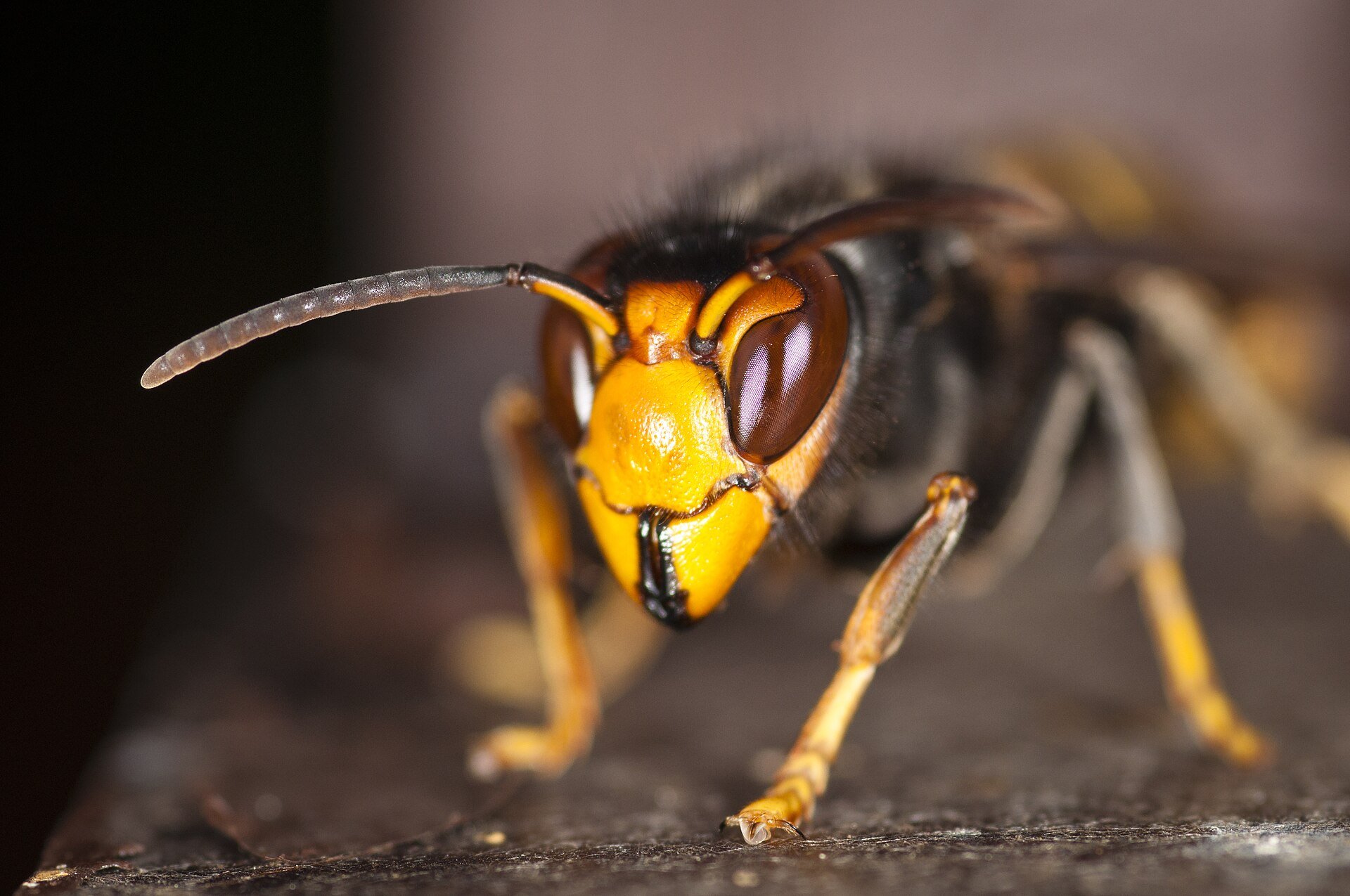
The head is dark, with a contrasting orange-yellow face.
KNOW THE DIFFERENCE
Not every large flying insect is an Asian hornet
Several familiar British insects can look similar at first glance. Knowing the differences can help you recognise a genuine sighting and avoid unnecessary reports.

Yellow-Legged Asian Hornet
Vespa velutina
A predominantly dark hornet with yellow lower legs, an orange face and a distinctive yellow-orange band towards the rear of the abdomen.
,_Lodz(Poland).jpg)
European Hornet
Vespa crabro
Our native European hornet is generally larger and has much more extensive yellow and reddish-brown colouring.

Common Wasp
Vespula vulgaris
The familiar common wasp has much brighter yellow and black markings across its body and is considerably smaller than a hornet.
.jpg)
BEHAVIOUR
What might you see?
Asian hornets can be particularly noticeable around honey bee colonies.
From summer onwards, they may hover outside hive entrances, waiting for returning honey bees. This behaviour is known as hawking.
If you see a suspected Asian hornet repeatedly hovering around a hive entrance, keep your distance and report the sighting.
KEEP YOUR DISTANCE
Never approach or disturb a nest
If you think you have found an Asian hornet or a nest, do not attempt to catch it, kill it or disturb the nest.
Take a photograph from a safe distance if you can do so safely, note the location and report the sighting through the official reporting service.
REPORT A SIGHTING
Think you've found one?
Don't wait — report it. The Asian Hornet Watch app provides identification guidance and lets you submit a suspected sighting with a photograph and location.
Prefer not to use the app?
Report OnlineTake a clear photograph if you can do so safely and include the location of the sighting. Do not approach or disturb a nest.
LOCAL EXPERTISE
Local eyes. Local action.
FDBKA members are actively involved in raising awareness of Yellow-Legged Asian Hornets and supporting local monitoring and response.
If you think you have seen one, please use the official reporting service rather than trying to catch, approach or deal with the insect or a nest yourself. Reports are assessed through the national response network.
Stay alert
Knowing what to look for makes genuine sightings easier to recognise.
Report quickly
Early reports give the authorities the best opportunity to investigate and act quickly.
Protect our pollinators
Honey bees and many other insects can be affected by this invasive predator.
FURTHER INFORMATION
Want to know more?
For the latest official identification, reporting and response information, see the guidance from the British Beekeepers Association and the National Bee Unit.